I was jokingly thinking to myself that the only way you could get me to read history like this is to illustrate it, but actually, this was still a bit of a slog. And maybe that’s because the story isn’t told in as engaging a way as it could be. Humbolt’s story is pretty incredible, and definitely lights up all kinds of interconnected aspects of 18th century history. This is narrated in a fairly paratactic, first we did this, then this, then this, way, that can feel a bit plodding. Though it is well suited to making you slow down and look at the illustrations, so maybe that’s intentional? I guess the book is really basically an adapted version of Wulf’s longer work on Humboldt, and frankly, I’m fine with having read the abridged version 😬
The real focus of this book, clearly, is on Alexander von Humboldt as an environmentalist, and early climate change activist. And that stuff was pretty kind-blowing (and frustrating), and definitely made me feel like I was learning things.
There is some secondary interest in his political views in relation to Indigenous and enslaved African people, but it seems like it’s rather cherry-picked to present the most positive version (some brief discussion of Humboldt’s diaries in the afterword gives a much less sunny picture). I wanted more of this kind of history, or rather, more of a sense of worldedness, interconnection, and gaps (a pet topic of mine, as per my previous post). It’s fascinating to think that here is this guy who travels across the globe, and in some ways has this bird’s eye vision of a totality, of all these various moving parts, but also…doesn’t. Because of information and media technology, etc, when he’s in one place, he knows next to nothing about what is happening elsewhere. There is a massive time lag on news. This distinct, between seeing more but also less, is super interesting to me! And the book tantalizingly gives you some hints of it, but doesn’t really explore. That’s not a critique of the book (“this book wasn’t about what I wanted it to be about!”), just me pondering.
Really, the pleasure of this book is the artwork, which is pretty wonderful. Lots of it is basically colored pencil drawings, in an almost childish style, but it’s punctuated by moments that lean more towards a William Blake kind of aesthetic, and there are also some really wonderful collages.
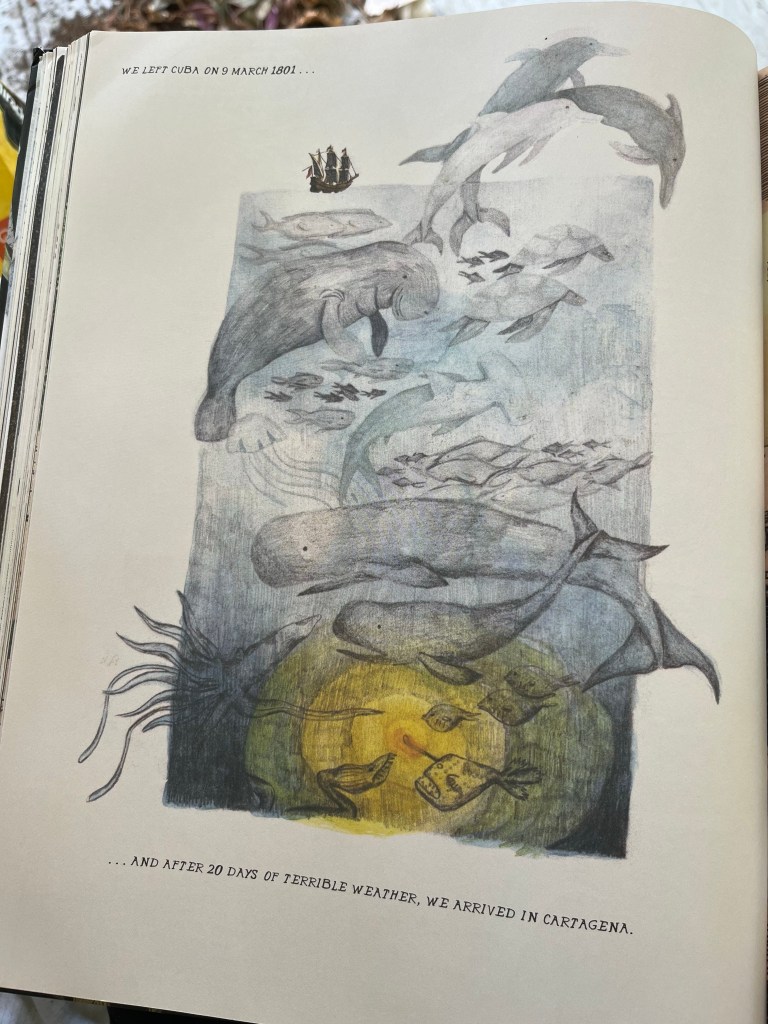
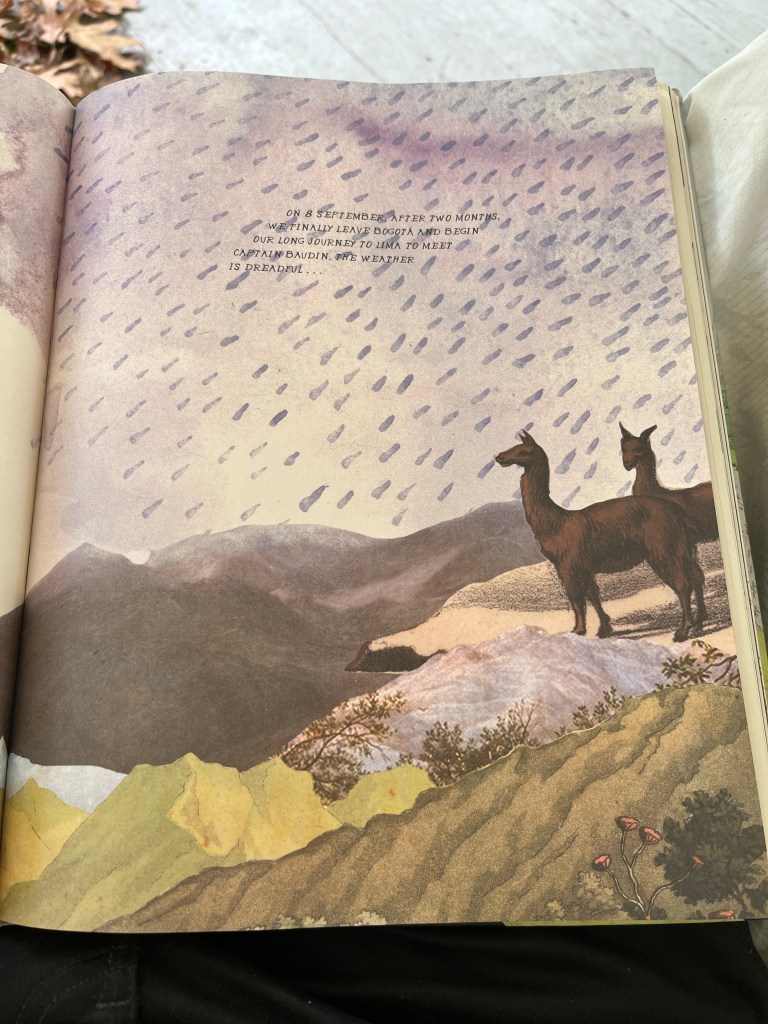
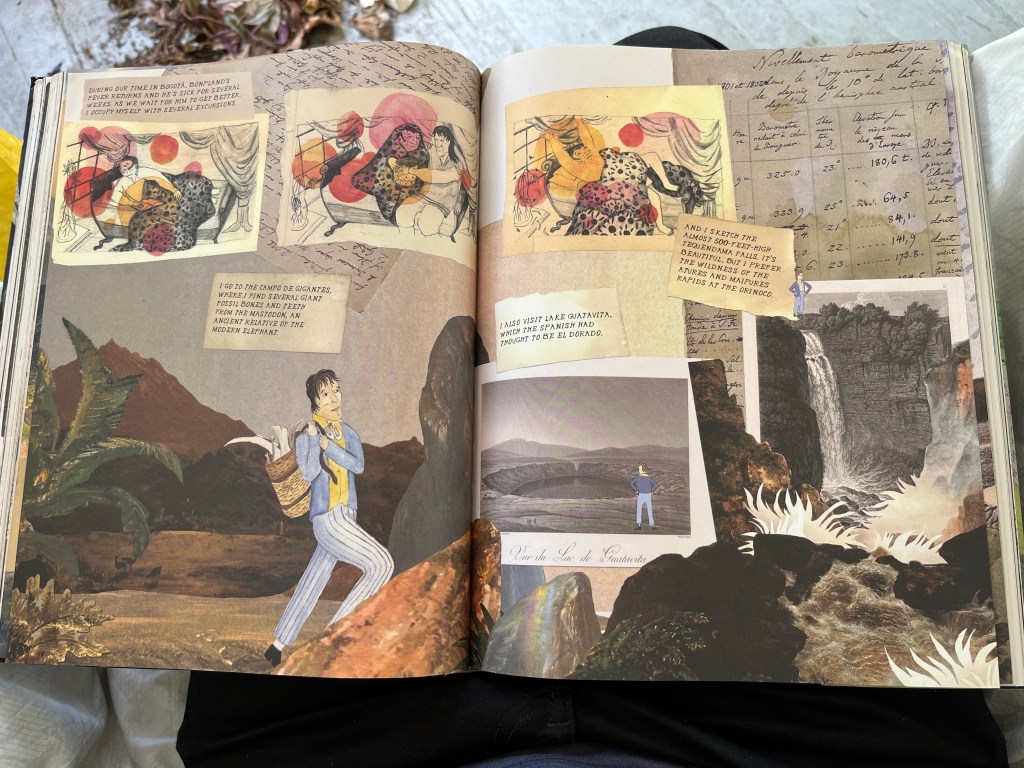
My absolute favorite, though, was pages that features images of pressed leaves and flowers — the Afterword informs you that they are actual plant species from South America. It’s very cool.
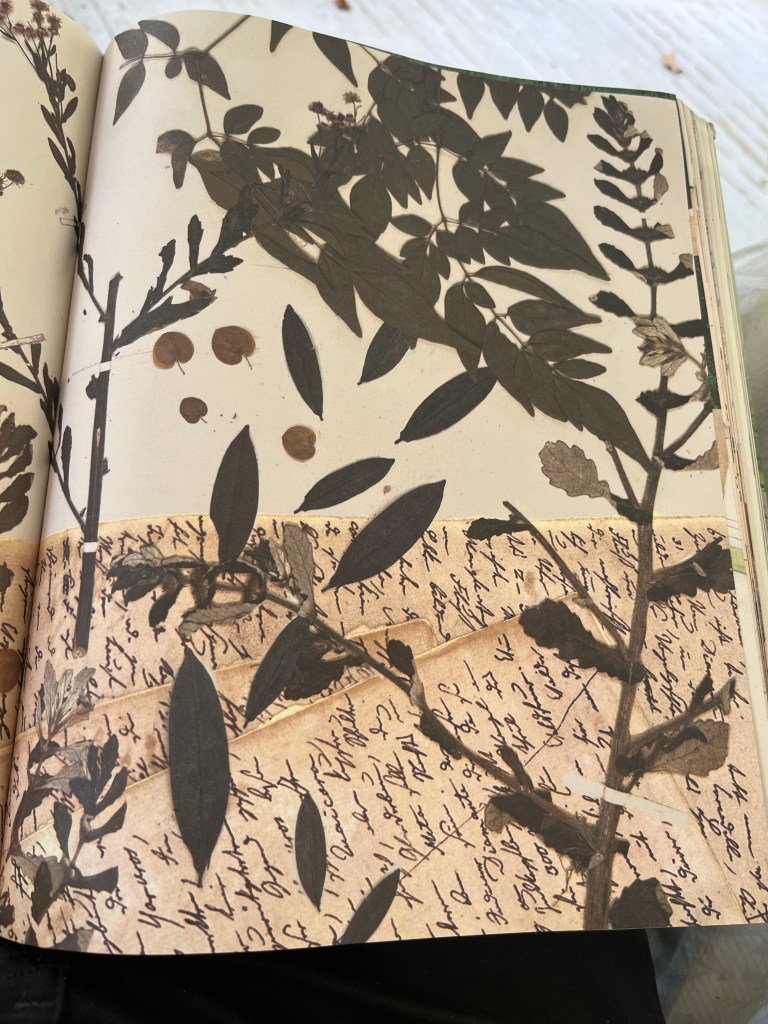
Point is, it’s more of a book to look at, overall…
 Kasia Reads