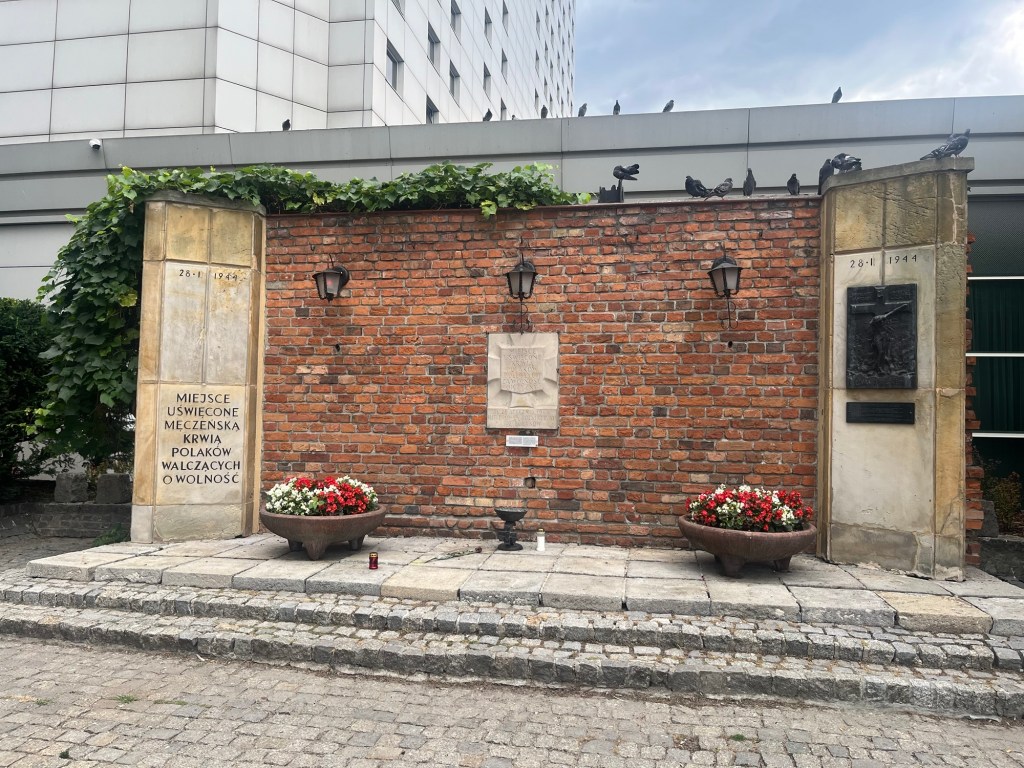
When I was in Warsaw last summer, I noticed, perhaps for the first time, a monument smack dab in the middle of city center, across the street from a giant mall. What was so striking to me about it were the various layers of meaning: firstly, that it marked a spot where 102 people had been executed by Nazis on a single day (January 28, 1944). Second, a caption explaining that the sculpture decorating the site, which was first unveiled in 1946, was created in September of 1944 — in the middle of the Warsaw Uprising. And then third, how the caption further explains, in language both sharp and euphemistic, that it was taken down in 1948, but restored in 2011. There’s a seething subtext of historical politics there. Still, what really grabbed me was the fact that in September 1944, in the midst of a hellish apocalypse, a person made a sculpture.

I thought of this again this afternoon as I watched Porcelain War, an absolutely vital documentary about artists in Ukraine today. There are several intertwined strands to this incredible film. One is about how people continue to make art in times of terror; indeed, how they find it imperative to do so, for their own emotional survival. A second pertains to the art they make about those horrors — art such as this film, with its marvelous animations traversing the delicate bodies of the porcelain creatures these artists create, and the beautiful shots of the countryside, and yes, even the beautiful shots of rubble and destruction. A third is about how occupying powers seek to destroy the culture of the places they invade, not only by destroying beautiful buildings and important cultural sites, but also by murdering artists, writers, musicians, dancers. And another reminds us that the ‘soldiers’ in Ukraine are civilians — indeed, some of them are these very artists, who had never before held a gun in their hands. One segment of the film shows us, via GoPro, what such warfare looks like. It’s terrifying. I’ve seen some reviews that take the movie to task for being too positive and shying away from the more unpleasant aspects of war, and with all due respect, this is just flat out wrong. As my friend Jen said, everyone wants to make sensationalistic docudrama torture flicks about war, and I think some people really believe that such films are the most ethical, even the only, true way to represent it. But what this film reminds us so stirringly is that there is also beauty, even in the heart of all this atrocity, and it has its own power.

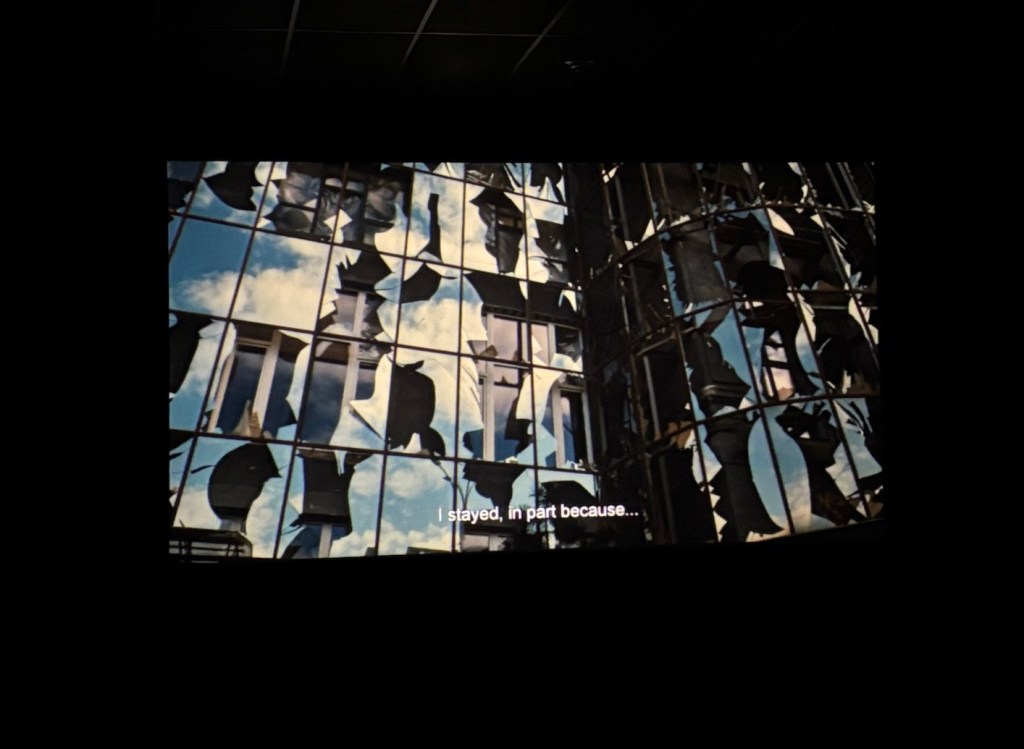
Porcelain War is an incredible film — awe-inspiring, thought-provoking, deeply moving. I hope a lot of people watch it.
 Kasia Reads
One thought on “Porcelain War”