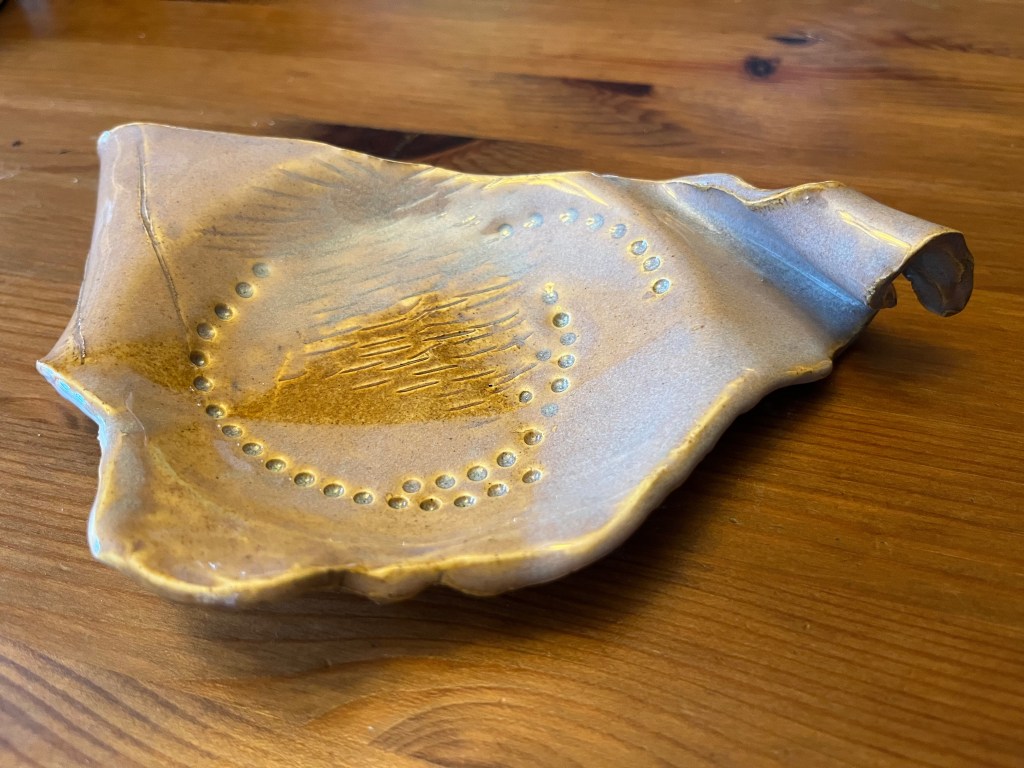
I think it is almost 2 years ago now that I signed up for a ceramics class with my dear child, and gradually realized that I was far more interested in making pottery than he was, and that I could in fact just sign up for a class on my own. I quickly became kind of addicted. I love making pottery; love how forgiving the clay is but also how creative and experimental you can get with it. Hours pass in the blink of an eye; it’s utterly absorbing but also extremely pleasurable, and I genuinely like the stuff I make, for the most part. I’ve taken some wheel throwing classes, but I still prefer to build by hand. I’m especially fond of folding or curling edges and playing with textures — a kind of hybrid between vessel and sculpture.
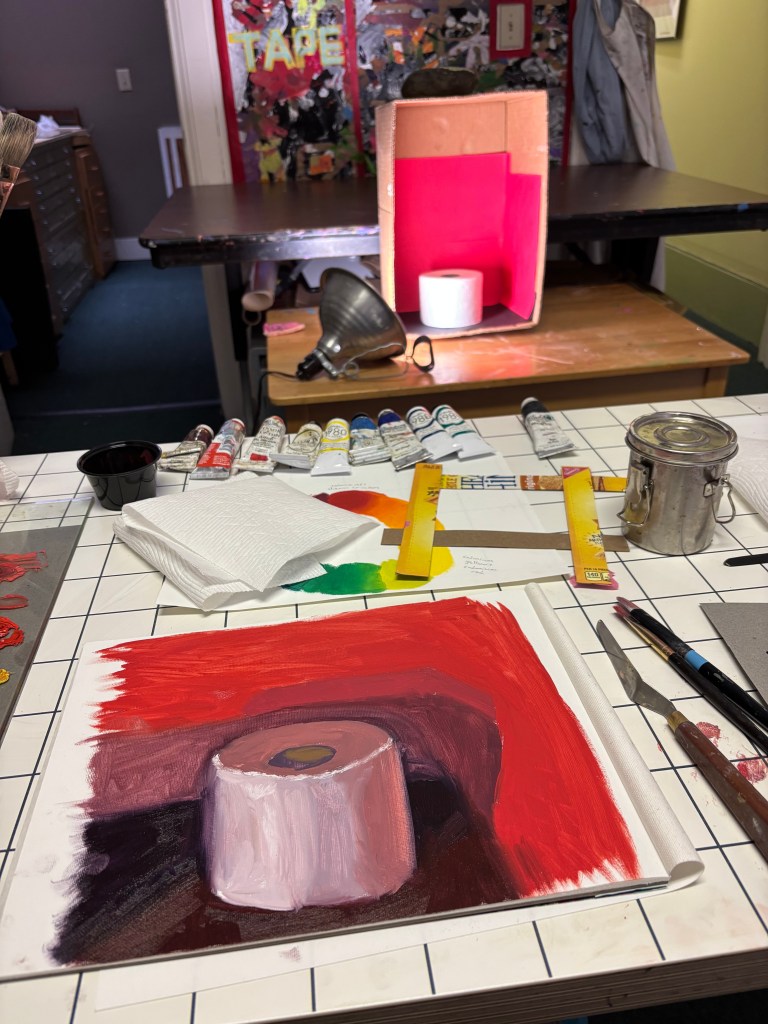
As I got more and more into ceramics, encouraged by loving friends and family, I thought, hey, I could also sign up for drawing lessons! I’ve been wanting to learn how to draw since I was a teenager, really, and somehow never could get into a class. So I found a lovely teacher, and persuaded a friend to come with me, and even though I’m still not all that good at drawing, I’ve learned so much. In Drawing from the Right Side of the Brain (which I gather remains the standard textbook), Betty Edwards argues that realistic drawing is like reading or arithmetic. It’s a skill that anyone can learn, unhelpfully mystified by notions of artistic genius. And it’s true that there do seem to be at least some basic elements that one can improve with practice — how to understand objects in space, shading, etc. It’s so neat, because you really do learn to see differently. In part, you have to learn to turn off what you know intellectually about a thing (like that it has a whole other side that’s hidden from view) so as to depict what is actually present to your eyes. It’s frustrating and difficult but also very enjoyable — also something I can get totally lost in, losing all sense of time. And then my teacher said we could also try some painting, so I’ve been doing that too! Painting is really mindblowing, because it teaches you about colors, and how they are so much more complicated than you ever realized. Like, try figuring out what color you would mix to paint something, if you couldn’t use black or white or gray or brown. It’s maddening. The longer you look at a color, the more impossible it seems.
And what’s also interesting about all of these things is how much internal resistance I seem to have to allowing myself to do them; an odd sense of shame, or audacity. Like, how embarrassing to make little bowls or sketches, as if I thought I could create something worthwhile. It’s so weird. I saw a very sweet video on instagram the other day where this delightful 20-something-year-old weirdo joyfully encouraged people to do whatever ridiculous thing their heart desires: “Embarrassment is just a layer you can chip through.” It’s so true.
The point of this long preamble is that I have started making art, in my middle age, and learning how to do it better, and it makes me want to spend even more time making it and getting better at making it. And so perhaps I was hoping that Old in Art School would be a kind of spiritual companion, and would even allow me to dream of actually going to art school someday. Thus it’s worth saying up front that this isn’t really a book about someone taking up an interest in art late in life, or making a dramatic swerve from her career path to do something else. Nell Painter had already had some training as an artist, and she continued her work as an eminent historian even as she started studying painting intensively. The book is less about the development of her art than it is about her development as an artist, namely, the lack of respect that an older Black woman gets in art school. This is compounded by the frustration of also having to do a lot of carework for her aging parents, particularly for a father whose own depression often makes him selfish and needy.
What of the things you come to realize while reading this book (or rather, listening to the author read the audiobook, which compounds the effect) is just how much we are socialized to see complaint — even if it’s valid! — as inappropriate. How it comes across as entitled, and entitled, by the way, is bad (Sara Ahmed has a whole book about this, I know). And the peculiar balance of experiencing sexism, racism, and ageism while also having pretty significant cultural prestige and economic privilege — full professor at Princeton, boatloads of academic accolades, etc — only exacerbates the problem. But there is a curious intimacy to it as well. Like, you really do feel like you get to know this woman, and her personality. It is direct and personal in a way that few other authors are willing to be, a real glimpse into the frustrating realities of the experience.
And it does also make you think about what it means to make art versus to be an artist, what art school is meant to teach you, and how you learn. Maybe the book did help me flesh out my dream — perhaps what it showed me is that I don’t actually want to go to art school, I just want to take more art classes, and to devote more time to practicing. The professionalization side, I can definitely skip.
 Kasia Reads